The notorious North Korean hacking group 'Lazarus' was seen installing a Windows rootkit that abuses a Dell hardware driver in a Bring Your Own Vulnerable Driver attack.The spear-phishing campaign unfolded in the autumn of 2021, and the confirmed targets include an aerospace expert in the Netherlands and a political journalist in Belgium.
The ALPHV/BlackCat ransomware gang claims to have breached the IT firm NJVC, which supports the federal government and the United States Department of Defense.The company supports intelligence, defense, and geospatial organizations. The company has more than 1,200 employees in locations worldwide.
The Cybersecurity and Infrastructure Security Agency (CISA) has added three more security flaws to its list of bugs exploited in attacks, including a Bitbucket Server RCE and two Microsoft Exchange zero-days.
Security researchers are warning of previously undisclosed flaws in fully patched Microsoft Exchange servers being exploited by malicious actors in real-world attacks to achieve remote code execution on affected systems.
BlueSky is a ransomware firstly spotted in May 2022 and it gained the attention of the threat researchers for two main reasons: the first one is that the group behind the ransomware doesn’t adopt the double-extortion model; the second one is that their targets are even normal users because the ransomware has been discovered inside cracks of programs and videogames.
Researchers have noticed new Royal ransomware operations active in the cybercrime world. Hackers involved demand a whopping $250,000 to $2 million ransom amount from victim corporations. The ransomware operation was first observed in January 2022.
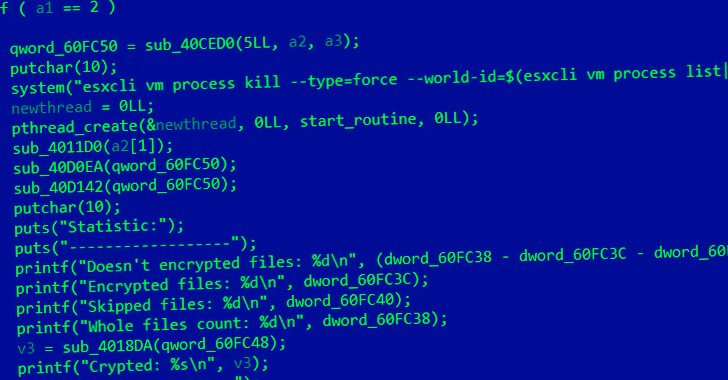
The recently discovered Linux-Based ransomware strain known as Cheerscrypt has been attributed to a Chinese cyber espionage group known for operating short-lived ransomware schemes. Cybersecurity firm Sygnia attributed the attacks to a threat actor it tracks under the name Emperor Dragonfly, which is also known as Bronze Starlight (Secureworks) and DEV-0401 (Microsoft).
Venafi surveyed 1,101 security decision makers (SDMs) in firms with more than 1,000 employees and found that eighty-one percent of companies have experienced a cloud security incident in the last year. Forty-five percent have suffered at least four security incidents in the same period. More than half of security decision makers believe that security risks are higher in the cloud than on-premise.
Whether you relish a mental challenge or fancy a six-figure paycheck, there are many good reasons to get into white hat hacking. That said, picking up the necessary knowledge to build a new career can seem like a daunting task. There is a lot to learn, after all.









/https://cyware-ent.s3.amazonaws.com/image_bank/8c35_shutterstock_639898315.jpg "icon")